Estimated Read Time: 3 minutes
As an interior designer, you have a gift for seeing the potential of a blank space. You know exactly how a specific color palette, texture, and furniture layout will harmonize. However, conveying that exact vision to a client using only mood boards and material samples can sometimes lead to miscommunication.
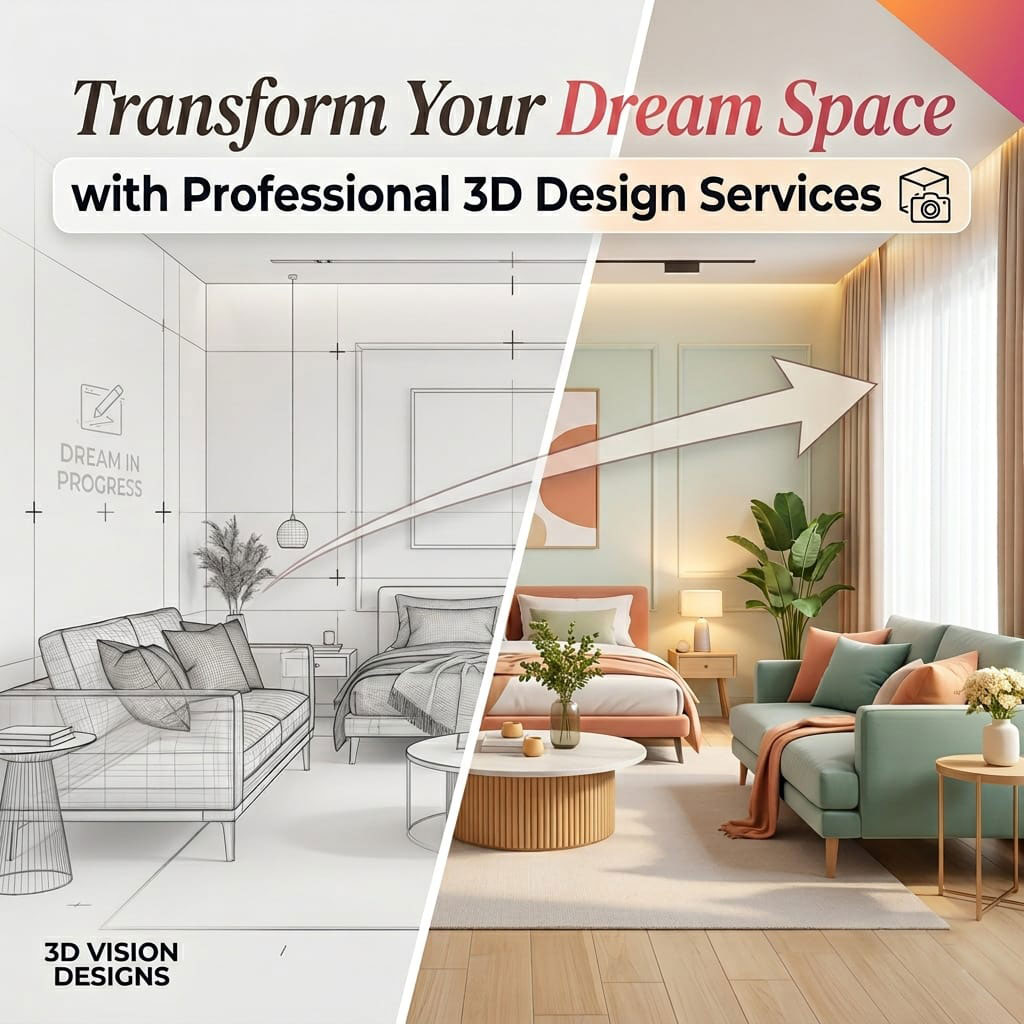
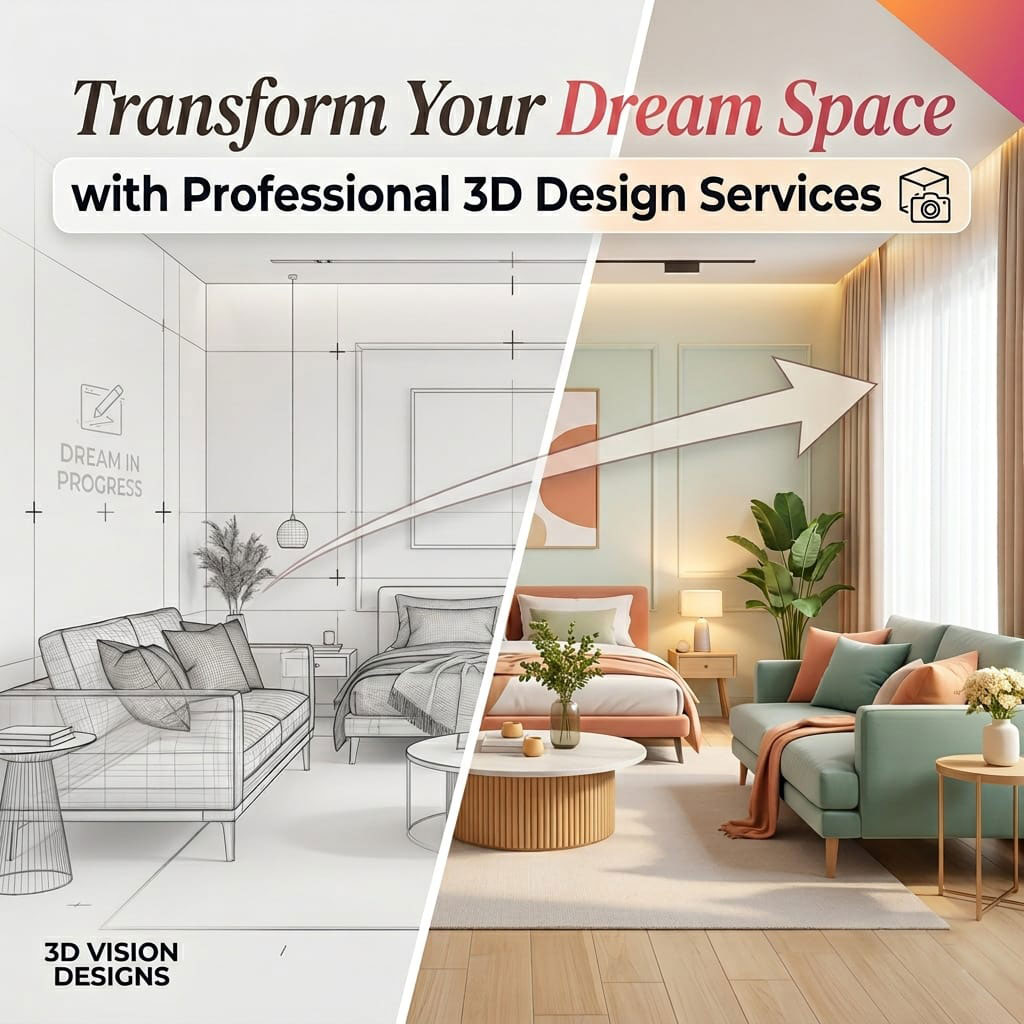
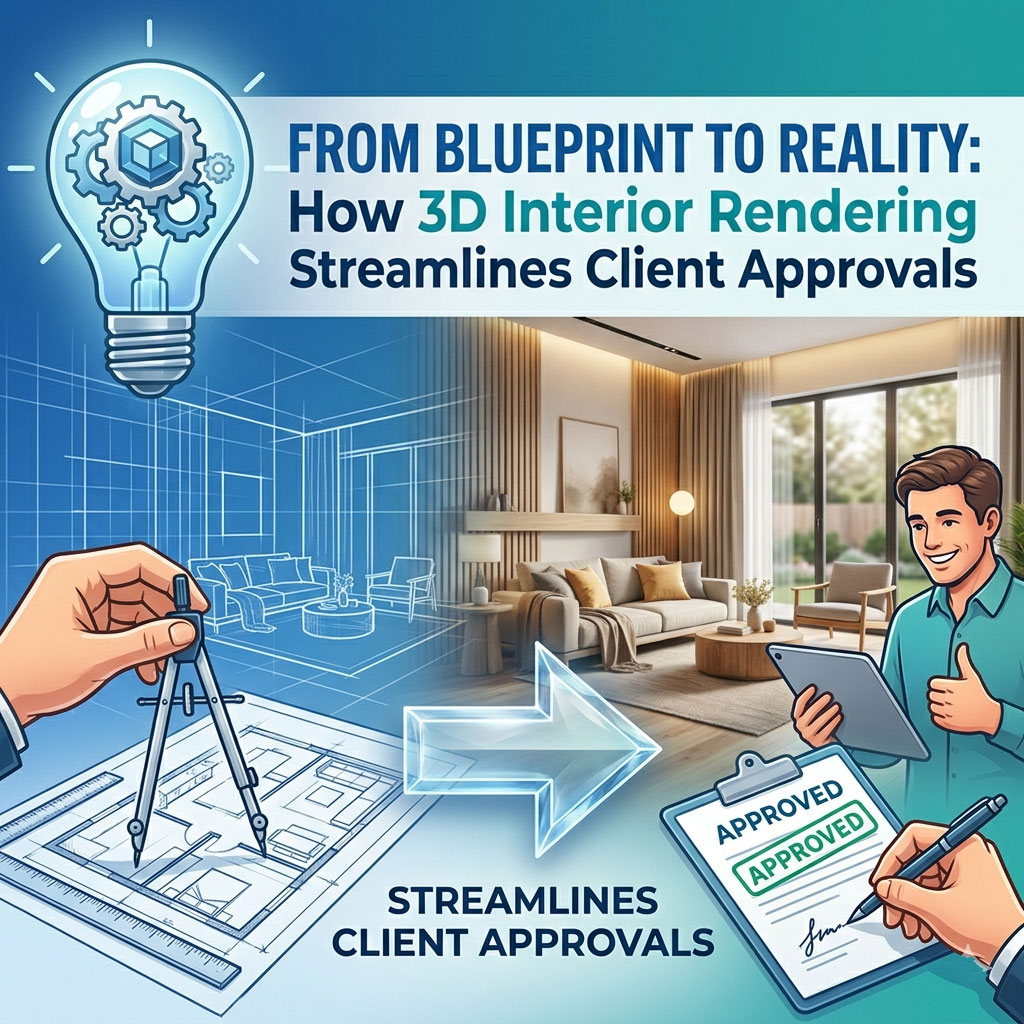
3D interior rendering acts as the ultimate bridge between your creative vision and your client’s understanding. Here is how it streamlines your workflow.
- Instant Alignment on Materials and Textures
Is that matte black or glossy? Will the hardwood floors clash with the kitchen cabinetry? 3D rendering allows you to apply exact digital replicas of fabrics, wood grains, metals, and lighting fixtures. When clients see a photorealistic representation of their future space, it eliminates misunderstandings and aligns expectations instantly. - Effortless Iterations and Revisions
Making changes to physical materials or rebuilding a space mid-construction is incredibly costly. Making changes to a 3D model is fast and cost-effective. If a client wants to see how a room looks with a different sofa configuration or a lighter paint shade, adjustments can be made digitally in a fraction of the time. - Designing with Accurate Lighting
Lighting dictates the mood of any interior. Our advanced 3D rendering techniques simulate both natural daylight and artificial fixtures accurately. This allows you to show your client exactly how the space will look at noon, during a cloudy day, or under warm evening lighting.
Work Smarter, Not Harder
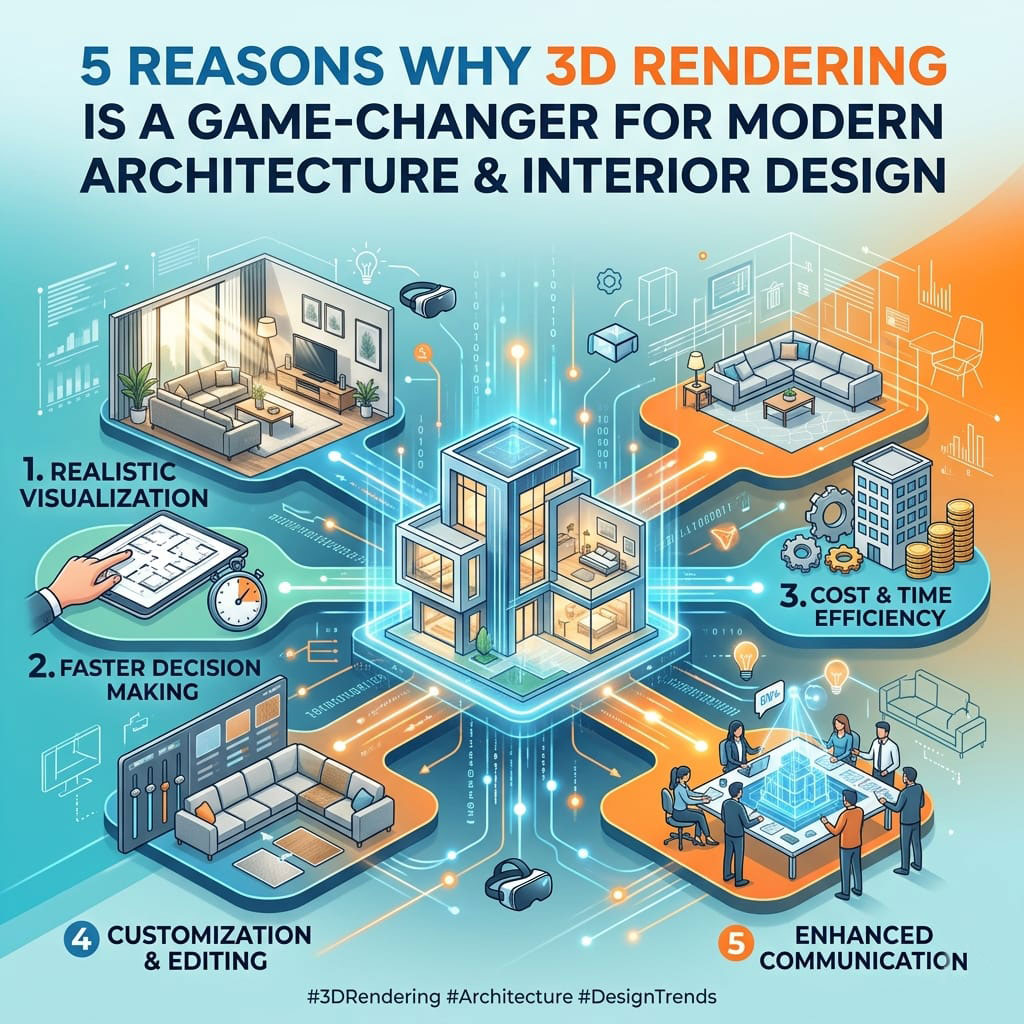
By integrating professional 3D rendering into your design presentation workflow, you can secure faster sign-offs, reduce project delays, and elevate your brand image.
Want to impress your clients at your next presentation? Let Jeeva 3D Design handle your renderings.