Introduction:
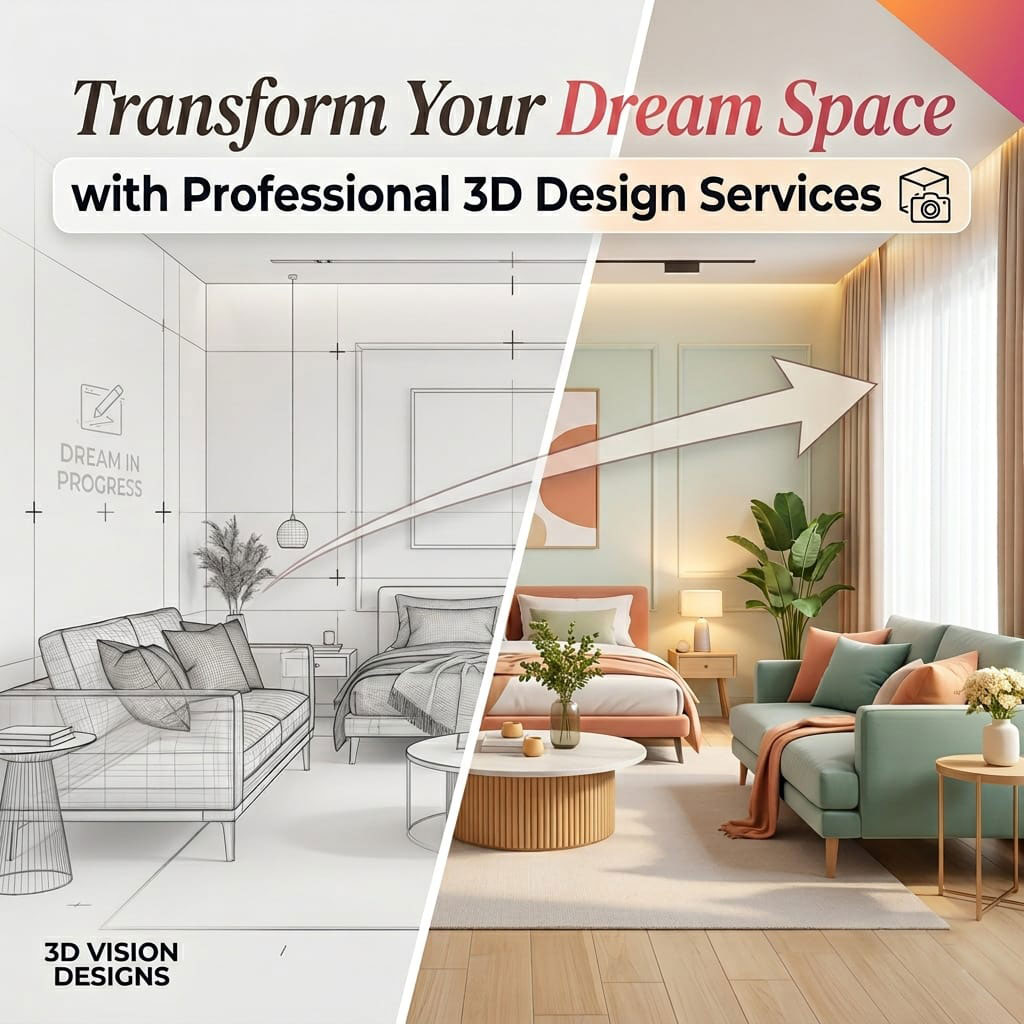
In the fast-paced worlds of architecture and interior design, conveying a vision to a client can be a major challenge. Blueprints and mood boards are excellent starting points, but they often leave too much to the imagination. Enter 3D rendering—the ultimate tool that bridges the gap between a designer’s imagination and a client’s reality.
At Jeeva 3D Design, we see firsthand how photorealistic visualization transforms projects. Here are five reasons why integrating 3D rendering into your workflow is no longer a luxury, but a necessity.
Body Paragraphs:
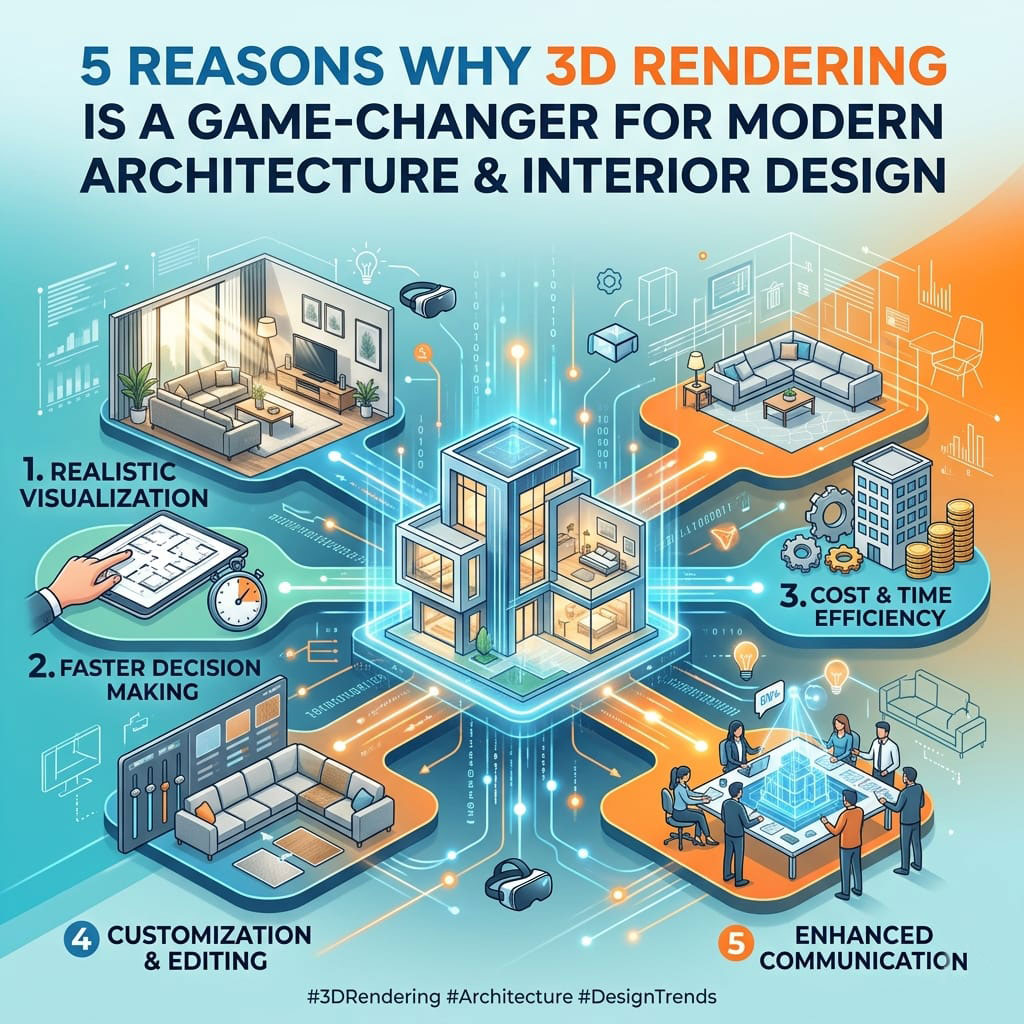
Eliminates Miscommunication: 2D drawings can be misinterpreted. A photorealistic 3D render shows exactly how textures, lighting, and spatial layouts will look in real life, ensuring everyone is on the same page.
Speeds Up the Approval Process: When clients can see the finished product before construction even begins, they make decisions faster and with greater confidence.
Saves Costly Mistakes: It is infinitely cheaper to move a virtual wall or swap a kitchen countertop material in a 3D software than it is to redo it physically on a construction site.
Elevates Marketing and Pre-sales: For real estate developers, 3D animations and renderings allow you to market and sell properties before breaking ground.
Allows for Unlimited Iterations: Want to see how a living room looks in morning light versus evening light? 3D rendering makes testing lighting scenarios and material variations seamless.
#3DRendering #ArchitecturalVisualization #InteriorDesignRendering #3DDesignServices #ExteriorRendering #PhotorealisticRendering #ArchitectureDesign #InteriorVisualization #BuildingDesign #Jeeva3DDesign